
Spatial Computing & Enterprise XR

Connect digital information with the places and tasks where it matters

Spatial computing brings digital content into a user’s view of the physical world or into an immersive environment. Depending on the task, that may mean a virtual reality simulation, an augmented reality overlay on a phone or tablet, or a mixed reality experience using a headset.

Optimance helps organisations explore, design, develop and deploy extended reality (XR) experiences. Our work spans strategy, content, real-time 3D, application development and device deployment. We focus on the operational or customer problem first, then select the technology that best fits it.
Enterprise applications to consider

Equipment familiarisation

Explore a machine, component or workflow in 3D before accessing the physical asset.

Immersive training

Practise decisions and procedures in a repeatable simulation.

Customer and stakeholder experiences

Demonstrate a product, facility or concept in an immersive format.

Field and operational support

Investigate whether visual overlays or guided information can support a specific task.

These are potential use cases, not a promise that every workflow can be solved by XR. Lighting, connectivity, safety rules, data sensitivity, ergonomics, device availability and user acceptance need to be assessed in context.

Choose the right platform for the job

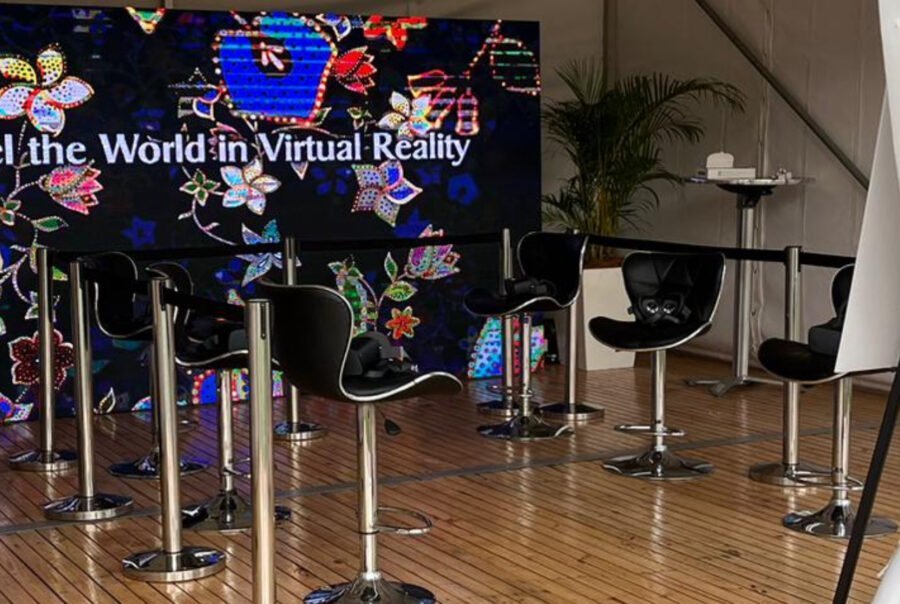
Phones and tablets can be practical where broad access and simple distribution matter. VR headsets can provide a fully immersive training environment. Mixed reality headsets can combine digital content with views of the physical environment, subject to device capabilities. Web-based delivery may reduce installation friction, while a native application may be needed for specialised capabilities or more controlled enterprise deployment.

Optimance can help evaluate options such as Meta Quest, Apple Vision Pro, Pico, HTC, mobile AR and web delivery against the requirements. Platform capabilities and APIs change, so device selection should be confirmed during discovery and tested against the intended workflow.

Case Study

Optimance partnered with CO.AS.IT to develop a suite of VR and AR experiences focused on the journey of the Sicilian Cart – a Museo Italiano artefact restored with vibrant colours – for education and aged care audiences.

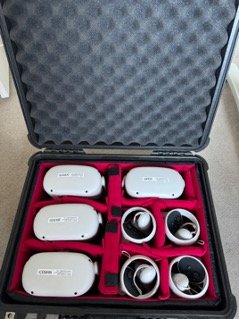
The project involved remote management, set up and configuration 15 Meta Quest 3s headsets, 3 Apple VisionPro, managed service of supporting the hardware, deployment through custom-built hard cases for ease of travel.

It was complete end-to-end solution from concept to deployment and customer support.

A staged approach reduces risk

1

Discover

Define the users, task, environment, constraints and success criteria.
2

Prototype

Test the core interaction with representative users before committing to a full production build. A prototype should answer a specific question, such as whether a 3D overlay improves comprehension or whether a training scenario is usable.
3

Develop

Build the content, interaction and application, with milestones and acceptance criteria agreed in advance.
4

Deploy and manage

Plan devices, user access, updates, support, analytics and security. For multi-site rollouts, device management and support processes can be as important as the application itself.

What should a project brief include?

Describe the problem, target users, existing systems and assets, intended devices, work environment, connectivity, privacy or security requirements, number of users and how you will measure success. If these details are not yet known, an initial discovery engagement can help define them.

Start with the problem, not the headset

Optimance can help your team determine whether XR is justified, identify a viable use case and create a roadmap from concept to deployment

Next Steps

Tell us the business problem you’re trying to solve, and we’ll help identify a practical next step.

Book an immersive technology demonstration

Our Services

VR Training & Simulation
Real world situation awareness and simulations
Web and Interactive 3D
WebAR and interactive 3D experiences
3D visualisation + Digital twins
Real-life simulations
Education & Cultural heritage
Immersive learning experiences